Maria Chen waited three years for a kidney. During that time, she spent 12 hours a week connected to a dialysis machine, watching her health slowly deteriorate while hoping a compatible donor would appear before it was too late. Her story was typical — one of 100,000 Americans on organ transplant waiting lists, many of whom would die waiting.
Today, Maria has a new kidney. But it didn't come from a donor. It was grown in a laboratory from her own cells, printed layer by layer by a machine that didn't exist five years ago. She is one of the first recipients of a bioprinted organ, and her successful surgery marks the beginning of the end for organ shortage as we know it.
The Science of Growing Organs
The technology behind lab-grown organs combines three revolutionary fields: stem cell biology, 3D bioprinting, and tissue engineering. The process begins with a small sample of the patient's own cells, typically taken from a skin biopsy or blood draw.
"We're not creating organs from nothing. We're giving the body's own cells the scaffolding and signals they need to build what they've always known how to build."
That's Dr. Jennifer Santos, director of the Regenerative Medicine Center at Stanford, where Maria's kidney was created. Her team has refined a process that seemed like science fiction just a decade ago.
The Bioprinting Process
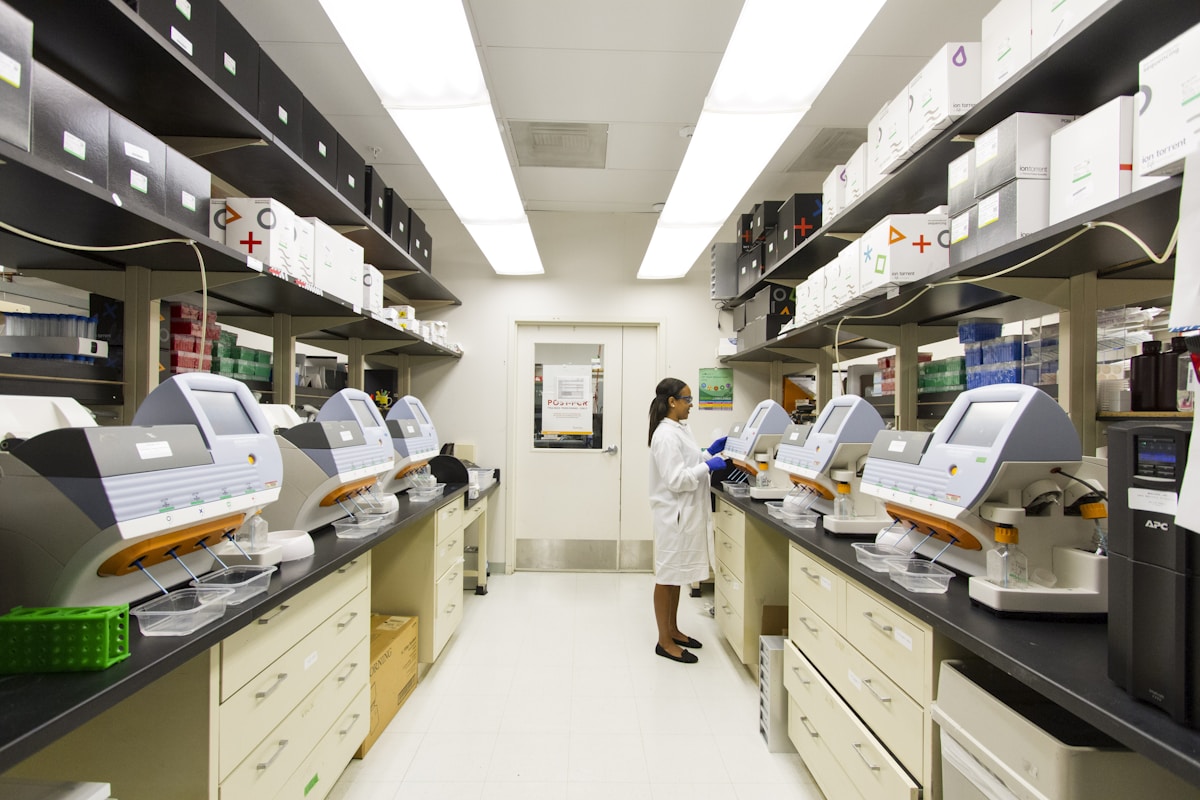
Creating a functional organ involves several stages:
- Cell harvesting: A small sample of patient cells is collected and reprogrammed into induced pluripotent stem cells (iPSCs), which can develop into any cell type in the body.
- Differentiation: These stem cells are guided to become the specific cell types needed for the target organ — kidney cells, blood vessel cells, etc.
- Bioink preparation: The cells are mixed with a biocompatible gel to create "bioink" that can be precisely deposited by 3D printers.
- Printing: A specialized printer deposits the bioink layer by layer, building up the organ's complex three-dimensional structure according to a digital blueprint.
- Maturation: The printed structure is incubated in a bioreactor that provides nutrients, oxygen, and mechanical stimulation, allowing cells to fully mature and form functional tissues.
The entire process, from cell harvest to transplant-ready organ, currently takes 8-12 weeks. That's a long time — but infinitely shorter than the years many patients spend on waiting lists.
Beyond Kidneys
While kidneys have been the focus of early efforts due to their relatively straightforward structure, research is advancing rapidly on other organs:
Livers: Partial bioprinted livers have been successfully transplanted in animal trials. The liver's regenerative capabilities make it an ideal candidate for bioprinting — even a partial organ can grow to full size once implanted.
Hearts: The most complex challenge. Researchers have printed functional heart valves and patches for repairing damaged cardiac tissue. Full hearts remain years away, but progress is accelerating.
Lungs: The intricate branching structure of lungs presents unique engineering challenges. Recent breakthroughs in printing vascularized tissue bring functional printed lungs closer to reality.
Skin: Already in clinical use for burn victims. Bioprinted skin grafts that perfectly match patient genetics eliminate rejection and scarring concerns.
The Economics of Revolution
Currently, a bioprinted kidney costs approximately $300,000 to produce — expensive, but comparable to the lifetime cost of dialysis treatment ($250,000-$500,000) and far less than the economic impact of a productive life lost. As the technology scales, costs are projected to drop dramatically.
Insurance companies are paying attention. Several major insurers have begun pilot programs covering bioprinted organs, recognizing the long-term cost savings. Within five years, bioprinted kidneys are expected to be standard treatment for end-stage renal disease.
Ethical Horizons
As with any transformative technology, bioprinting raises new ethical questions. If we can print organs, what about enhancements? Could athletes receive bioprinted muscles with improved performance characteristics? Could the wealthy buy biologically superior organs?
Regulators are working to stay ahead of these questions. The FDA has established a framework for approving bioprinted organs that addresses safety, efficacy, and equity concerns. Most experts believe the technology should be regulated like any other medical treatment, with access based on medical need rather than ability to pay.
A Future Without Waiting
For Maria Chen, the philosophical debates are less important than the practical reality: she has her life back. She goes to work, plays with her grandchildren, and no longer spends her days tethered to a machine.
"I used to think about death every day," she says. "Now I think about the future. That's what this technology gave me — a future."
By 2030, researchers project that bioprinted organs will eliminate transplant waiting lists entirely. For the 17 people who currently die every day waiting for organs, that future can't come soon enough.