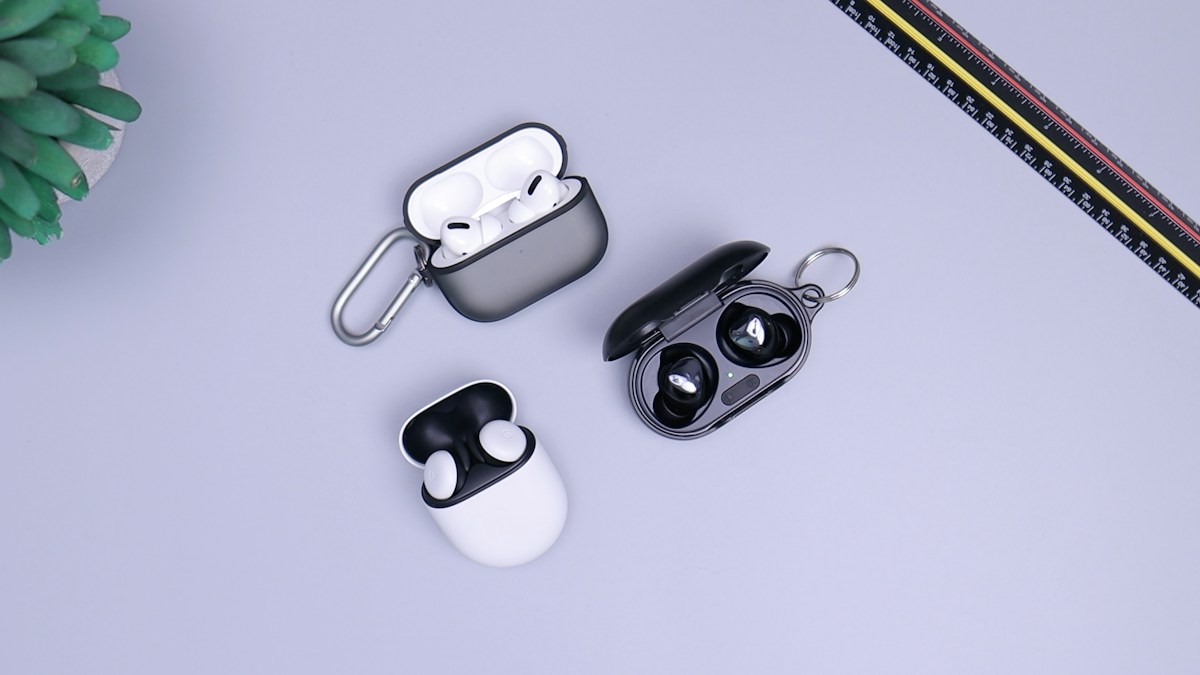
The Tower of Babel is crumbling. Apple's AirPods Pro 3 and Google's Pixel Buds Ultra now offer real-time translation across 94 languages with latency under 200 milliseconds—fast enough for natural conversation. The language barrier, humanity's oldest division, is dissolving.
How It Works
Modern translation earbuds combine on-device neural networks with cloud processing for complex phrases. When someone speaks Japanese, the earbuds capture the audio, process it through speech recognition, translate the text, and synthesize speech in your language—all in under a fifth of a second.
The experience is surreal. You hear someone speaking Mandarin, but your brain processes English. After a few minutes, you forget you're even using technology. Conversation flows naturally, jokes land, nuance survives.
"I negotiated a business deal in Tokyo last week. My Japanese counterpart spoke no English. We talked for three hours without a human interpreter. Five years ago, that was science fiction."
The Accuracy Revolution
Early translation tools were famously unreliable—useful for menus, useless for meaning. The latest generation has achieved near-human accuracy. Independent testing by the University of Edinburgh found AirPods Pro 3 translation matches professional interpreters 94% of the time for common language pairs.
More impressively, the systems now handle idioms, cultural context, and even humor. They recognize when direct translation would miss the point and adapt accordingly. A Japanese speaker's "it would be difficult" correctly becomes "no" in English.
The Travel Transformation
Tourism has been revolutionized. Travelers no longer need phrasebooks, language apps, or awkward pointing. Wander through Morocco's souks, negotiate in Thai floating markets, or have genuine conversations with locals in rural Vietnam—all in your native language.
Hotels report that language-barrier complaints have dropped 80% since translation earbuds became standard. Airlines offer loaner devices for international flights. Travel anxiety has plummeted as the fear of being unable to communicate disappears.
Business Without Borders
Global commerce is transforming. Small businesses can now sell internationally without language staff. Customer service can operate across markets. Teams collaborate across languages in real-time. The friction of translation that once favored large corporations has evaporated.
Professional interpreters aren't disappearing—they're moving upmarket. High-stakes negotiations, legal proceedings, and diplomatic exchanges still demand human nuance. But routine business translation has become commodity technology, priced at $249 for earbuds.
The Education Impact
Language learning faces an existential question. Why spend years mastering Spanish when earbuds translate perfectly? Enrollment in foreign language courses has dropped 40% since 2023.
But linguists argue something is lost. "Language shapes thought," explains Dr. Lera Boroditsky of UC San Diego. "Speaking a language gives you access to a worldview, a culture, a way of being that translation can never fully capture. We're trading depth for convenience."
The Remaining Challenges
Translation earbuds still struggle with:
- Heavy accents and dialects (accuracy drops to 70%)
- Noisy environments (cocktail party problem)
- Rare languages (only 40 of 7,000 languages fully supported)
- Emotional subtext and sarcasm
- Simultaneous speakers
Improvement continues rapidly. Each conversation trains the AI further. By 2030, experts predict these limitations will largely vanish.
A World Without Language Barriers
What happens when anyone can speak to anyone? Cultural exchange accelerates. Isolation decreases. Understanding—or at least the possibility of understanding—becomes universal. The technology enables connection that language once prevented.
But something is also lost. The particular beauty of mastering a foreign tongue. The achievement of hard-won fluency. The cognitive benefits of multilingualism. Progress always demands trade-offs.
For now, billions are simply delighted to finally be understood. The earbud in your ear has done what millennia of education could not: made the whole world comprehensible.