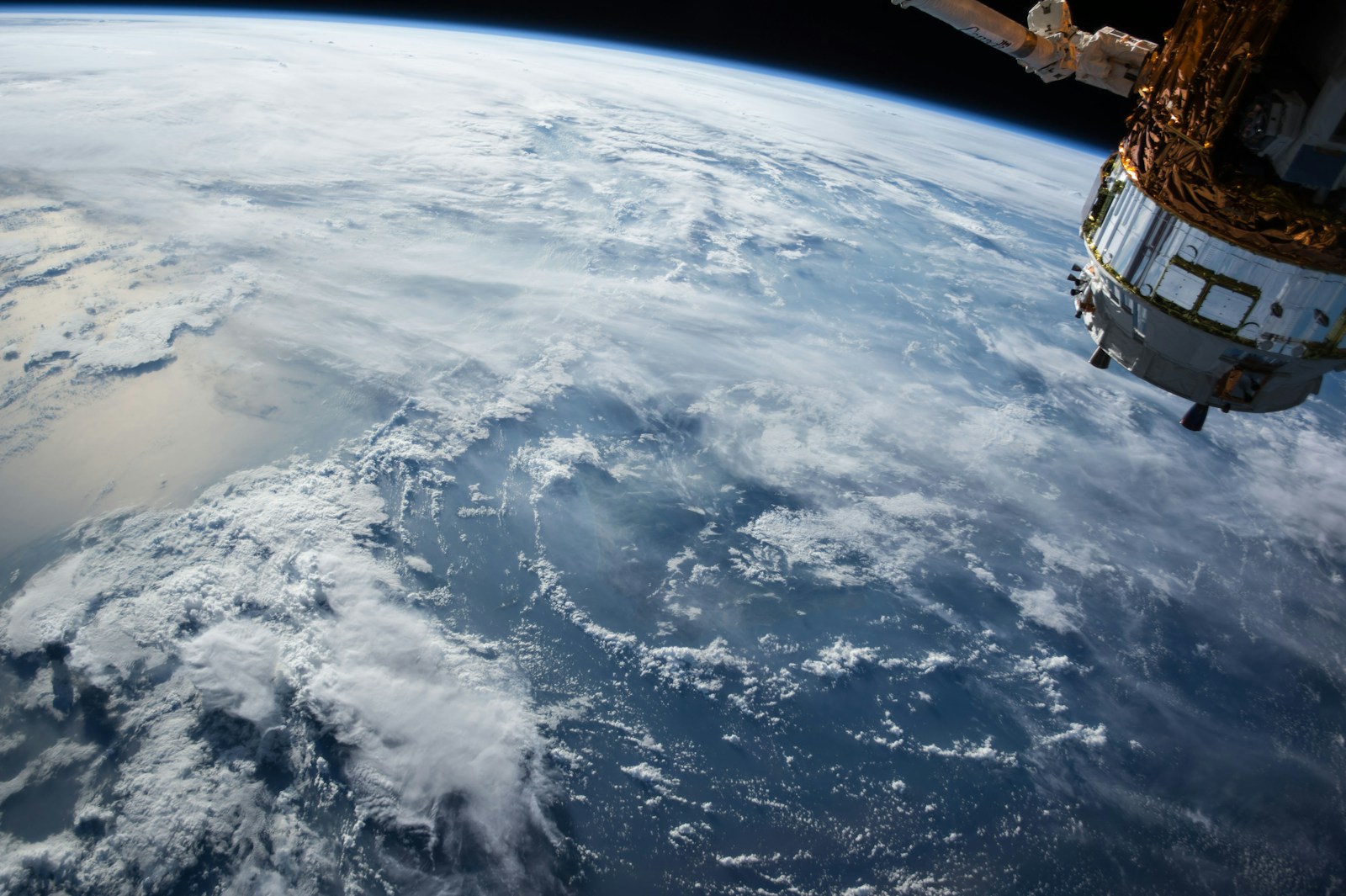
Four hundred kilometers above Earth, sunrise comes every 90 minutes. Through the panoramic windows of the Orbital Hilton, guests watch the terminator line sweep across continents while sipping champagne in zero gravity. This is the new frontier of luxury travel, where a king-size bed floats in microgravity and the view changes from Caribbean blue to Himalayan white in the time it takes to finish breakfast.
The Dawn of Orbital Hospitality
When Axiom Space launched the first private space station module in 2024, it marked the beginning of a revolution. Now, three major orbital hotels are operational, with five more under construction. The Orbital Hilton, Voyager Station, and Aurora Sky Station each offer their own take on extraterrestrial hospitality—and none of them come cheap.
"We're not selling hotel rooms," explains Axiom CEO Michael Suffredini. "We're selling transformation. People who go to space come back fundamentally changed. We call it the overview effect—seeing Earth from above shifts your entire perspective on existence."
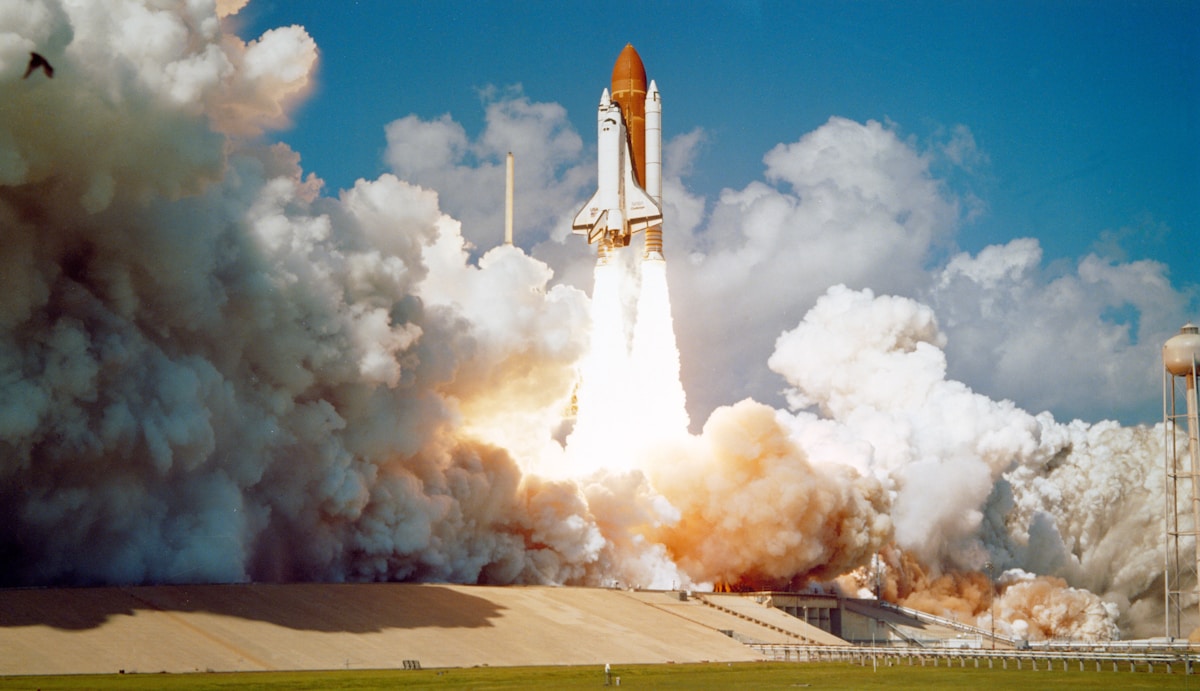
The observation lounge of Voyager Station, featuring 360-degree views of Earth and the cosmos beyond.
What $3 Million Buys You
A two-week stay at the Orbital Hilton costs approximately $3.2 million per person. That includes round-trip transport via SpaceX Crew Dragon, all meals (specially designed for microgravity dining), and a full program of activities. But what does day-to-day life actually look like in orbit?
Guests wake in private cabins with sleeping bags attached to walls—necessary in zero gravity. Mornings begin with a view that defies description: Earth rotating below, stars wheeling above, the thin blue line of atmosphere separating life from void. Breakfast is surprisingly normal, though liquids come in sealed pouches with straws.
"I've stayed at the world's finest hotels—the Burj Al Arab, Aman Tokyo, Singita in Africa. Nothing prepared me for waking up in space. Watching thunderstorms crawl across Africa while floating weightless... it's impossible to put into words."
— Richard Liu, tech entrepreneur and Orbital Hilton guest
Activities in Microgravity
Space hotels have developed an entire industry around zero-gravity entertainment. Guests can try orbital photography, capturing Earth in ways impossible from the surface. They can conduct their own science experiments in the microgravity lab. They can experience "stellar yoga"—a practice developed specifically for weightlessness that's described as profoundly meditative.
For the adventurous, spacewalks are available—fully guided EVAs (extravehicular activities) that let guests float freely outside the station, tethered but essentially alone in the void. The cost? An additional $1.2 million for 90 minutes.
The Voyager Station Vision
While existing stations offer authentic microgravity experiences, Voyager Station is building something different: a rotating wheel that will generate artificial gravity through centripetal force. When complete in 2028, it will be the largest structure ever built in space—a ring 200 meters in diameter, spinning slowly to simulate lunar gravity.
"The ISS model is wonderful for short visits, but extended stays in zero-G cause significant health issues," explains Voyager designer Tim Alatorre. "Our station will let guests experience the wonder of space while maintaining the comfort of gravity. You'll be able to walk, sit in chairs, take showers—normal things that are impossible on current stations."
The Health Challenge
Space tourism isn't without risks. Microgravity causes fluid to shift toward the head, creating a condition astronauts call "puffy face." Bone and muscle loss begin within days. Cosmic radiation exposure accumulates with every minute in orbit. All guests must undergo extensive medical screening, and those with certain conditions are simply ineligible.
Hotels have developed countermeasures: mandatory exercise programs, medication protocols, and strict exposure limits. Most guests describe minor discomfort—headaches, congestion, space motion sickness—that resolves within 48 hours. Serious incidents have been rare, though not absent.
Democratizing the Stars
At current prices, space tourism remains the province of billionaires and the ultra-wealthy. But costs are falling rapidly. SpaceX's Starship promises to reduce launch costs by 90%, potentially bringing orbital trips into the range of luxury cruise pricing within a decade. Suborbital flights, which offer a few minutes of weightlessness and Earth views, are already available for under $500,000.
"My grandchildren will think nothing of space travel," predicts Virgin Galactic founder Richard Branson. "Just as my grandparents couldn't imagine routine air travel, future generations won't remember when space was inaccessible. We're at the very beginning of this journey."
The Environmental Question
Critics point to the carbon footprint of rocket launches, questioning whether space tourism is ethical in an era of climate crisis. Defenders note that new rocket fuels are increasingly sustainable—SpaceX is developing methane synthesis from atmospheric CO2—and that the overview effect has historically turned people into passionate environmentalists.
"Everyone who sees Earth from space becomes an environmentalist," says astronaut Ron Garan. "When you see how thin and fragile our atmosphere is, how interconnected all life on Earth appears, you can't help but want to protect it."
Beyond Earth Orbit
For some, orbital hotels are just the beginning. SpaceX is already selling lunar flyby missions—week-long journeys that loop around the Moon and return to Earth. More ambitious plans include lunar surface hotels and, eventually, Mars settlements that could welcome tourists.
In the observation lounge of the Orbital Hilton, a guest gazes at the Moon—closer than it's ever appeared to human eyes outside a spacecraft. Somewhere on that silver surface, construction robots are already preparing the foundation for humanity's next great hotel. The golden age of space tourism has only just begun.