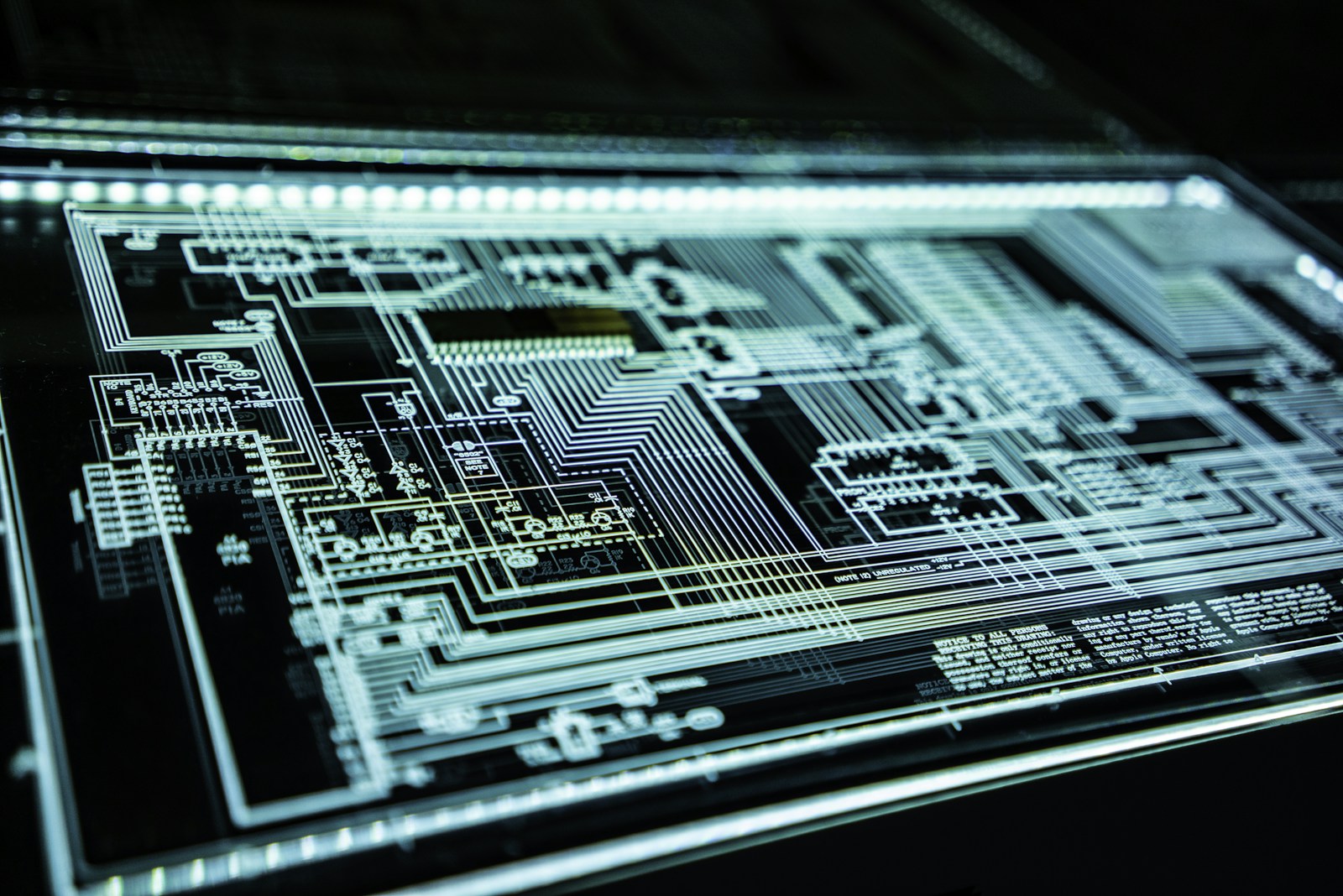
Beneath the streets of Geneva, photons race through fiber optic cables at the speed of light, carrying secrets that cannot be intercepted. This is the Quantum-Secure Financial Network, connecting major banks across Europe with encryption guaranteed by the laws of physics themselves. Welcome to the era of unhackable communication.
The Problem With Current Encryption
Today's encryption relies on mathematical problems that are extremely difficult—but not impossible—for computers to solve. The most common method, RSA encryption, depends on the difficulty of factoring large prime numbers. Classical computers would need thousands of years to break it.
But quantum computers don't play by classical rules. Using Shor's algorithm, a sufficiently powerful quantum computer could crack RSA encryption in minutes. Every encrypted message ever sent—banking records, medical files, state secrets—could suddenly become readable to anyone with quantum capabilities.
The quantum-secured data center in Zurich, where financial transactions are protected by the laws of physics.
Enter Quantum Key Distribution
Quantum Key Distribution (QKD) offers a fundamentally different approach to security. Instead of relying on mathematical difficulty, it exploits quantum mechanics—specifically, the observer effect. When someone measures a quantum system, they inevitably change it. This means any attempt to intercept a quantum-encrypted message leaves detectable traces.
"With QKD, we don't have to hope our encryption is strong enough. We know, with mathematical certainty, that interception is physically impossible without detection."
— Dr. Renato Renner, ETH Zurich Quantum Information Group
How It Works
In QKD systems, encryption keys are encoded in the quantum states of individual photons. These photons are sent between two parties—traditionally called Alice and Bob. The quantum properties of the photons mean that any eavesdropper (Eve) who tries to intercept them will disturb their quantum states, alerting Alice and Bob to the intrusion.
If no disturbance is detected, Alice and Bob know their key is secure and can use it to encrypt their actual message using conventional methods. The beauty is that the security doesn't depend on computational limits—it's guaranteed by the fundamental laws of quantum mechanics.
Real-World Deployment
Quantum networks are no longer laboratory experiments. China has built a 4,600-kilometer quantum communication backbone connecting Beijing to Shanghai, with satellite links extending coverage globally. The European Union's EuroQCI initiative is creating a continent-wide quantum-secured network. In the United States, the Department of Energy operates quantum links between national laboratories.
Financial institutions are early adopters. JPMorgan Chase, HSBC, and Deutsche Bank have all deployed QKD systems for high-value transactions. "When you're moving billions of dollars, absolute security isn't a luxury—it's a necessity," explains cybersecurity director James Morrison.
Challenges Remain
Despite progress, quantum encryption faces significant hurdles. Current QKD systems require expensive specialized hardware. Photons can only travel about 100 kilometers through fiber before degrading, requiring "trusted nodes" that reintroduce some security vulnerabilities. And quantum networks are still far too slow for everyday internet use.
Researchers are working on solutions. Quantum repeaters, which can extend range without compromising security, are advancing rapidly. Satellite-based systems can bypass fiber limitations entirely. And new protocols promise faster key distribution rates.
The Post-Quantum Future
Alongside quantum encryption, researchers are developing "post-quantum cryptography"—mathematical encryption methods that are resistant to quantum attacks. These algorithms can run on classical computers while remaining secure against quantum decryption. In July 2024, NIST finalized the first post-quantum encryption standards, and major tech companies are already implementing them.
The ideal future likely combines both approaches: post-quantum algorithms for everyday use, with quantum encryption for the most sensitive applications. Together, they promise a world where privacy can be guaranteed by the laws of physics themselves.
A New Era of Security
As quantum computers grow more powerful, the race between code-makers and code-breakers accelerates. For the first time in history, we have encryption methods that are provably secure—not just difficult to break, but physically impossible to crack undetected.
The quantum internet is coming. And it may be the first communication network in history that truly cannot be hacked.