Sarah Chen flexes her right hand, watching the titanium tendons ripple beneath synthetic skin. Two years ago, a climbing accident crushed her arm beyond repair. Today, her prosthetic is stronger than the original ever was—and she's considering replacing the left one voluntarily. "Why settle for human limitations," she asks, "when you can be more?"
The Augmentation Revolution
What began as medical necessity has evolved into a lifestyle choice. Millions of people worldwide are now voluntarily augmenting their bodies with technology—not to replace what was lost, but to gain what was never possible. From enhanced vision to neural interfaces, humanity is upgrading itself.
"We're at an inflection point," explains Dr. Hugh Herr, director of MIT's Biomechatronics Group. "For the first time, artificial limbs exceed biological ones in certain capabilities. Athletes with carbon-fiber legs can outrun their unaugmented competitors. Workers with exoskeletons can outperform natural muscle. The question isn't whether to enhance—it's how far to go."
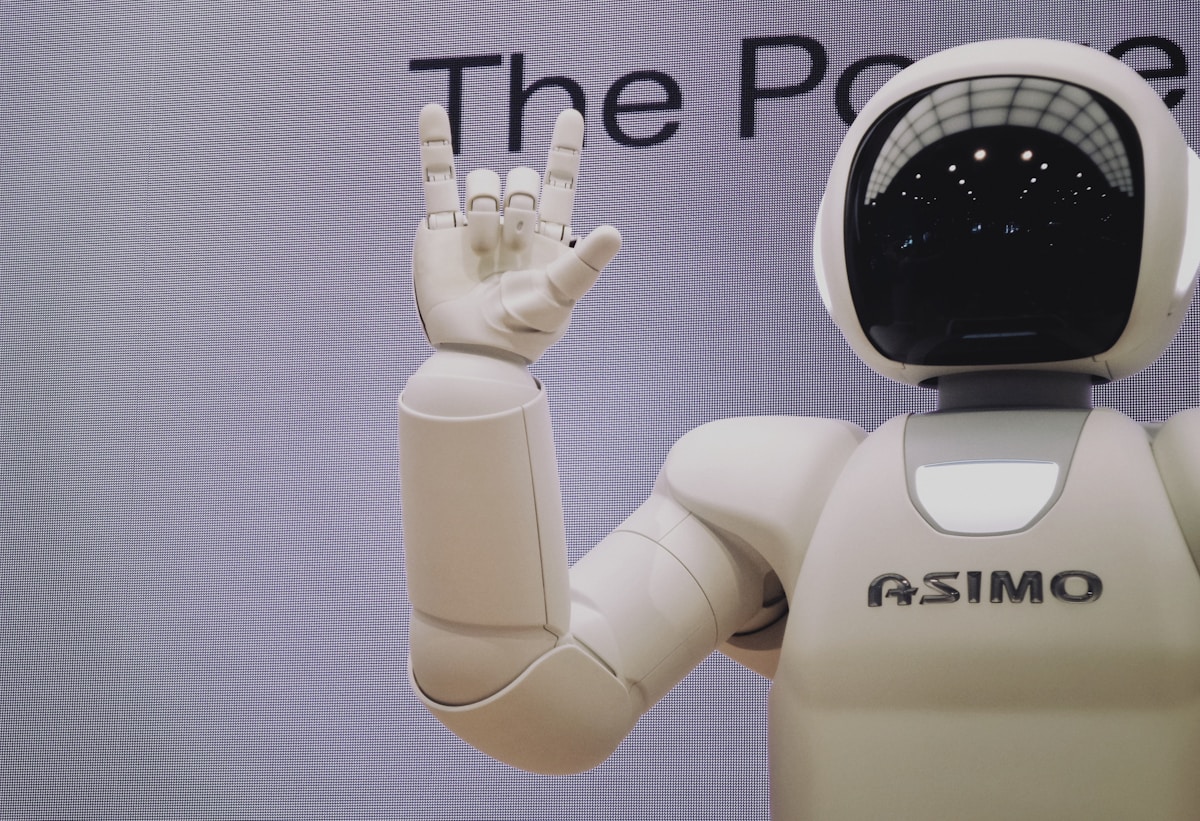
The latest generation of neural-linked prosthetic hands offers sensation feedback and superhuman grip strength.
Beyond Replacement
Early prosthetics aimed to restore normal function. Today's augmentations aim to exceed it. The NeuraLink Pro provides processing power that supplements biological cognition. Retinal implants can see infrared and ultraviolet light. Cochlear upgrades enable hearing frequencies dogs can't detect.
"My implant connects me to the internet at the speed of thought. I can access any information instantly—Wikipedia, real-time translations, mathematical calculations. It's like having a supercomputer in my skull."
— Marcus Webb, early NeuraLink adopter
The Enhancement Menu
Today's augmentation clinics offer a staggering array of options. Subdermal RFID chips replace keys and passwords. Haptic implants enable tactile communication. Magnetic finger implants let users sense electromagnetic fields. For the wealthy, full-limb replacement with enhanced prosthetics is increasingly common.
The most radical augmentations involve the nervous system directly. Brain-computer interfaces allow thought-controlled devices. Spinal implants can boost reflexes beyond human limits. Some early adopters report experiences that seem to transcend normal consciousness entirely.
The Sports Question
Competitive athletics is in crisis. Should enhanced athletes compete against unaugmented ones? Oscar Pistorius's carbon-fiber legs raised the question decades ago, but today's augmentations make it urgent. Enhanced runners break records. Augmented swimmers dominate pools. The Olympics face an existential choice.
Some advocate for separate leagues—"natural" and "enhanced" categories. Others argue that all technology is enhancement, from running shoes to altitude training. A few radicals suggest abandoning restrictions entirely, letting technology push human performance to its limits.
The Inequality Divide
High-end augmentations remain expensive, creating a new form of inequality. Those who can afford enhancement gain advantages in employment, athletics, and daily life. Those who can't fall further behind. The gap between augmented and natural humans could become the defining division of the 21st century.
"We're creating two classes of human beings," warns ethicist Dr. Kenji Nakamura. "The enhanced will live longer, work better, and experience more. The unenhanced will become, effectively, a lower caste. This isn't science fiction—it's happening now."
The Identity Question
At what point does enhancement change what you fundamentally are? If you replace enough biological components with technological ones, are you still human? Philosophers call this the "Ship of Theseus" problem, but for augmented individuals, it's personally pressing.
"I've replaced about 30% of my body," says veteran biohacker Neil Harbisson. "My vision is augmented. My bones are reinforced. I have sensors that natural humans don't. Am I still human? I prefer to think I'm human-plus. The next step in our evolution."
The Hacker Underground
Not all augmentation happens in licensed clinics. A thriving underground of "grinders" performs self-surgery, implanting homemade devices in garages and apartments. Some seek enhancements too radical for official medicine. Others simply can't afford legitimate procedures.
The results are mixed. Some grinder innovations have been adopted by mainstream medicine. Others have led to infections, rejections, and deaths. Regulation struggles to keep pace with a community that deliberately operates outside the system.
Corporate Integration
Companies are beginning to require or incentivize augmentation for certain roles. Warehouse workers with exoskeletons are more productive. Traders with neural interfaces process information faster. Some employers offer augmentation packages as job benefits.
Labor advocates raise alarms. "Your body is not a company asset," argues union leader Maria Santos. "Requiring workers to surgically modify themselves for employment is a fundamental violation of bodily autonomy. Where does it end?"
The Path Forward
Humanity stands at a crossroads. The technology to fundamentally alter our bodies exists and is improving rapidly. The choice to remain "natural" is becoming exactly that—a choice, not a default. Within a generation, unaugmented humans may be a minority.
Sarah Chen looks at her titanium hand, then at her still-biological left arm. The decision isn't as hard as she once thought. In a world where human limitations are increasingly optional, why accept any limits at all?
The age of the cyborg has begun. The only question is who we'll choose to become.