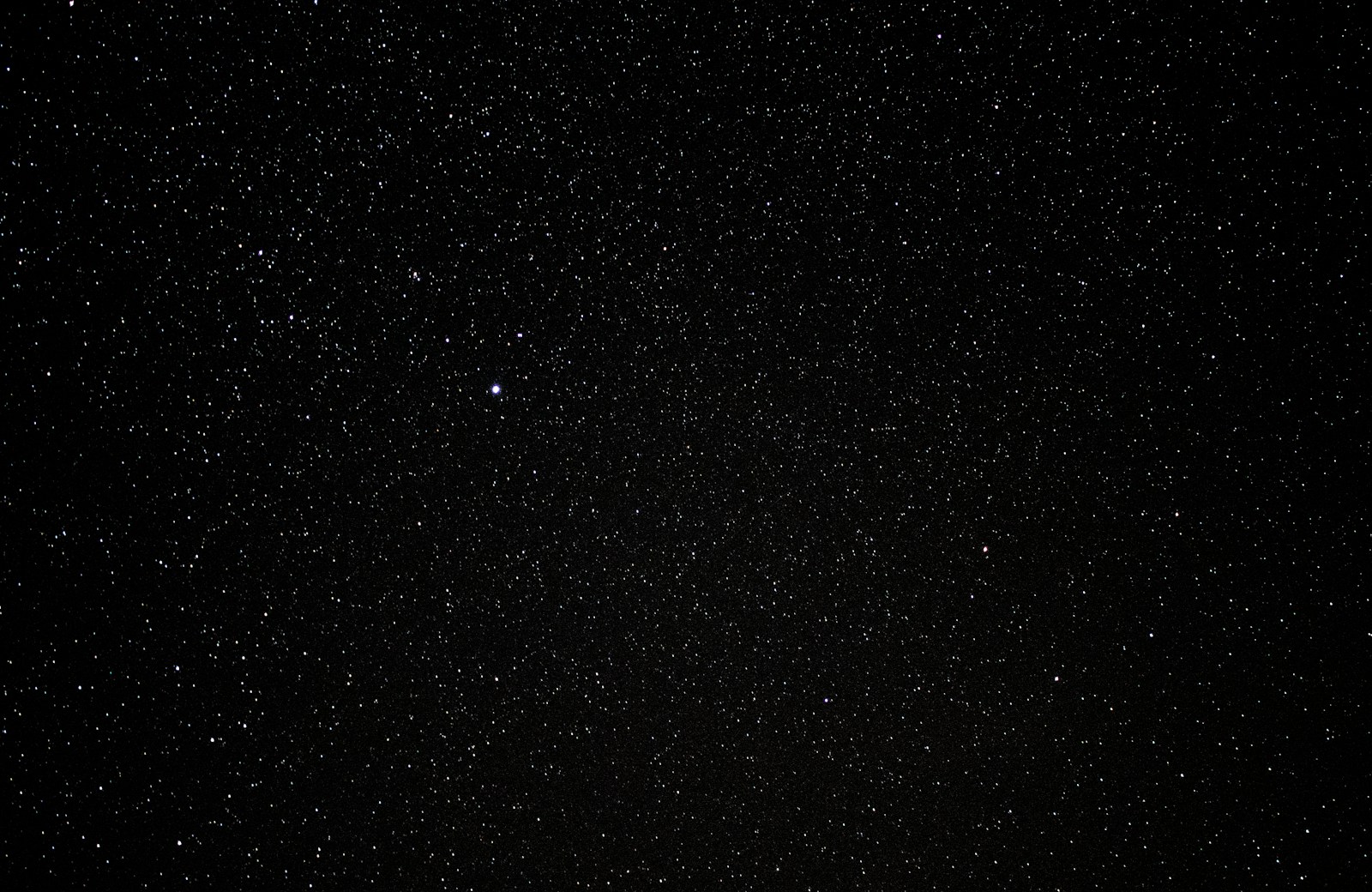
The signal arrived at 3:47 AM Eastern Time, buried in terabytes of infrared data from the James Webb Space Telescope. At first, astronomer Dr. Yuki Tanaka thought her analysis software had malfunctioned. The readings from a star 1,470 light-years away showed something impossible: a structure too large, too regular, and too warm to be natural.
The Discovery
KIC 8462852—already famous as "Tabby's Star" for its mysterious dimming patterns—has confounded astronomers for nearly a decade. But the latest Webb observations reveal something far stranger than irregular dust clouds or comet swarms. The infrared signature suggests an artificial structure spanning millions of kilometers, harvesting energy directly from the star.
"We've eliminated every natural explanation we can think of," says Dr. Tanaka, lead author of the study published in Nature Astronomy. "Dust would have a different thermal profile. Planets don't behave this way. What we're seeing is consistent with only one hypothesis: a Dyson swarm."
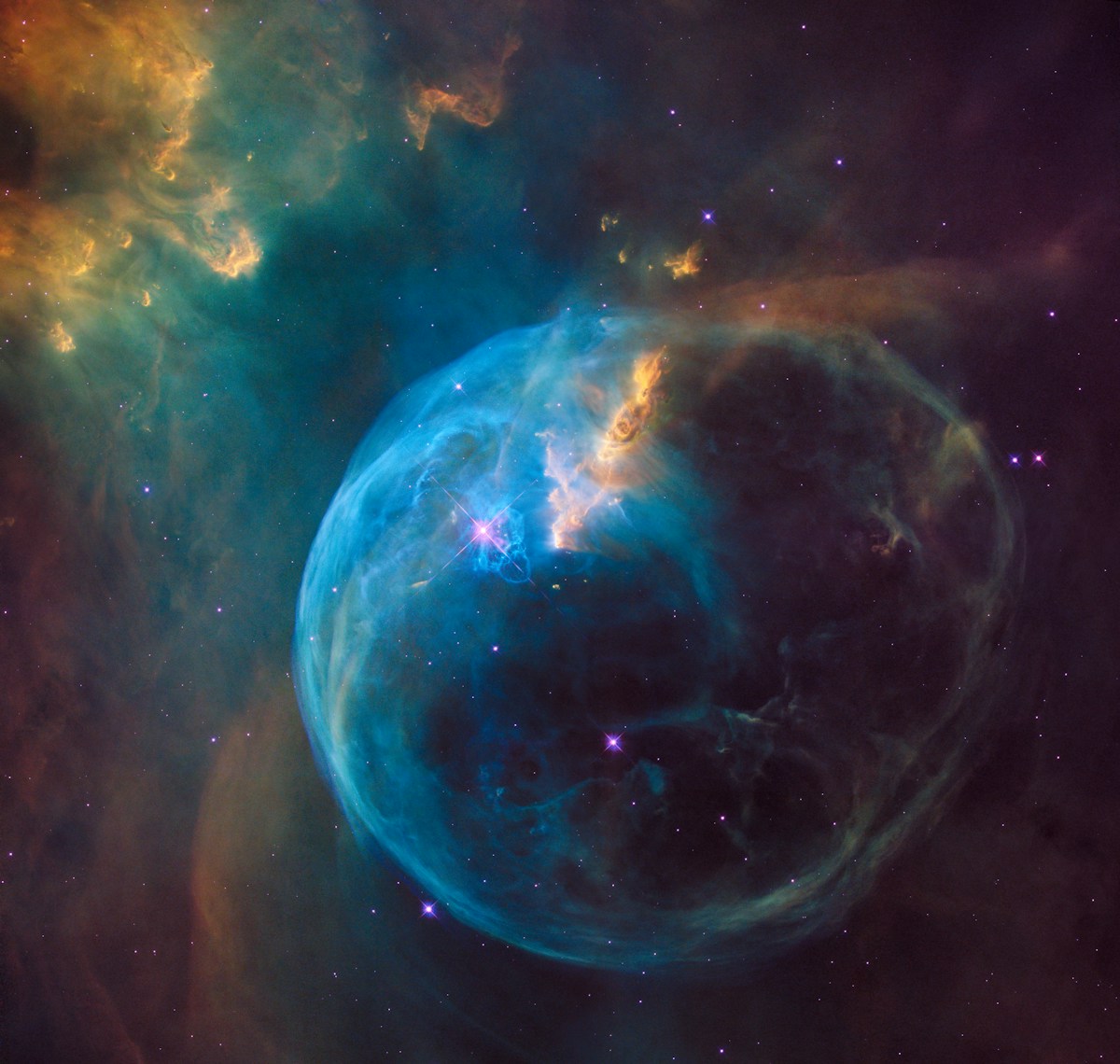
Artist's impression of a partial Dyson swarm—millions of solar collectors orbiting a star to harvest its energy.
What Is a Dyson Swarm?
First theorized by physicist Freeman Dyson in 1960, a Dyson sphere—or more practically, a Dyson swarm—represents the ultimate in energy harvesting. An advanced civilization, having exhausted the resources of its home planet, would build millions of solar collectors around its star, capturing a significant fraction of its total energy output.
"Any sufficiently advanced civilization will eventually face energy constraints. The logical solution is to harvest stellar output directly. If we're seeing this at KIC 8462852, it means someone else reached that stage millions of years before us."
— Dr. Jason Wright, Penn State SETI Research
The Evidence
Webb's observations reveal several anomalies that resist natural explanation. The star dims by up to 22% at irregular intervals—far too much to be caused by orbiting planets. The dimming patterns are asymmetric, suggesting structures of varying sizes and orbits. And critically, the infrared excess indicates something is absorbing starlight and re-radiating it as heat.
Computer models suggest the structures cover approximately 15% of the star's surface area when viewed from Earth's perspective. If they form a complete swarm, the actual coverage could be much higher. The temperature profile—around 300 Kelvin—is consistent with technological infrastructure rather than natural phenomena.
The Skeptics Respond
Not everyone is convinced. Dr. Ethan Siegel, astrophysicist and science communicator, urges caution. "Extraordinary claims require extraordinary evidence. Yes, these observations are unusual. But we're a long way from proving alien intelligence. There could be exotic natural phenomena we haven't considered."
Others point to the history of false positives in SETI research. Pulsars were briefly thought to be alien signals when first discovered. The "Wow! signal" of 1977 remains unexplained but is generally attributed to natural causes. Could KIC 8462852 be another case of nature mimicking technology?
Implications of Contact
If the structure is artificial, the implications are staggering. A civilization capable of building a Dyson swarm would be millions, perhaps billions, of years more advanced than humanity. Their technology would be indistinguishable from magic. Their goals and values would be utterly alien.
Should we attempt contact? SETI researchers are divided. Some argue that any civilization advanced enough to build megastructures would have already detected our radio emissions. Others warn that attracting the attention of a vastly superior intelligence could be catastrophically dangerous.
The Search Intensifies
Following the Webb discovery, every major telescope on Earth and in space has turned toward KIC 8462852. Radio telescopes are listening for signals. Optical observatories are searching for laser communications. Even gravitational wave detectors are checking for anomalous signatures.
So far, no radio signals have been detected. But the absence of communication doesn't mean the absence of intelligence. A civilization millions of years old might use communication methods we can't conceive, or might simply have no interest in contacting us.
What Happens Next
NASA has fast-tracked a proposal for a dedicated mission to study the star in greater detail. The conceptual "Tabby's Star Observer" would use advanced coronagraphs to image the structures directly, potentially revealing their true nature. Launch is projected for 2032.
In the meantime, the world waits. In living rooms and laboratories, in churches and parliaments, humanity grapples with a question that seemed purely hypothetical until now: Are we alone in the universe?
The data from James Webb suggests we may finally be close to an answer. Whatever that answer turns out to be, it will change everything.